当需要从缓存中淘汰数据时,我们希望能淘汰那些将来不可能再被使用的数据,保留那些将来还会频繁访问的数据,但最大的问题是缓存并不能预言未来。一个解决方法就是通过 LRU 进行预测:最近被频繁访问的数据将来被访问的可能性也越大。缓存中的数据一般会有这样的访问分布:一部分数据拥有绝大部分的访问量。当访问模式很少改变时,可以记录每个数据的最后一次访问时间,拥有最少空闲时间的数据可以被认为将来最有可能被访问到。
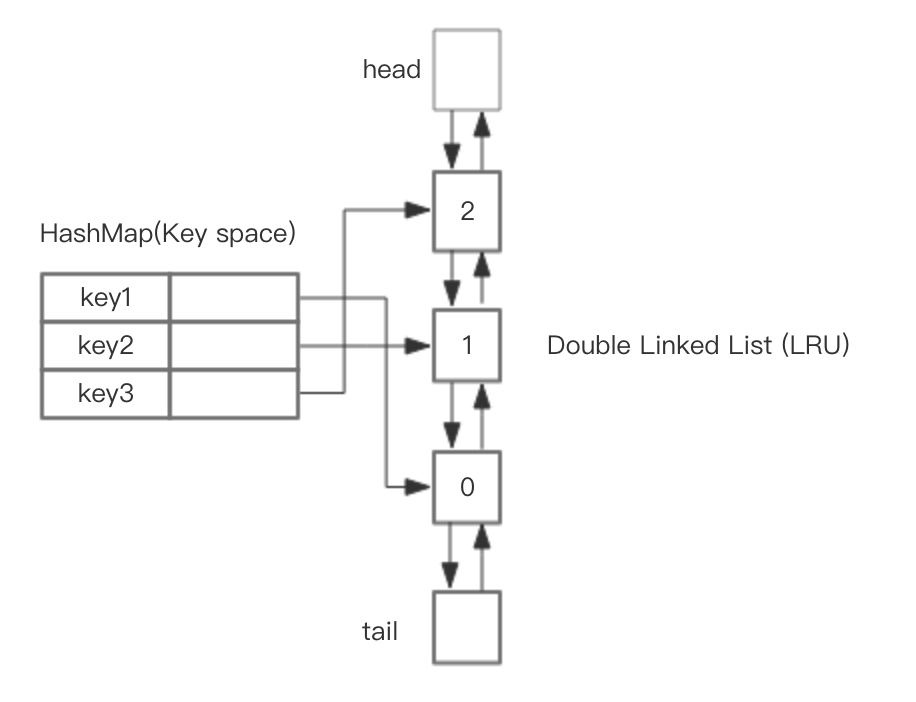
基于 HashMap 和 双向链表实现 LRU 的

head 代表双向链表的表头,tail 代表尾部。首先预先设置 LRU 的容量,如果存储满了,可以通过 O(1) 的时间淘汰掉双向链表的尾部,每次新增和访问数据,都可以通过 O(1)的效率把新的节点增加到对头,或者把已经存在的节点移动到队头。
LRU Go 代码实现
  1
  2
  3
  4
  5
  6
  7
  8
  9
 10
 11
 12
 13
 14
 15
 16
 17
 18
 19
 20
 21
 22
 23
 24
 25
 26
 27
 28
 29
 30
 31
 32
 33
 34
 35
 36
 37
 38
 39
 40
 41
 42
 43
 44
 45
 46
 47
 48
 49
 50
 51
 52
 53
 54
 55
 56
 57
 58
 59
 60
 61
 62
 63
 64
 65
 66
 67
 68
 69
 70
 71
 72
 73
 74
 75
 76
 77
 78
 79
 80
 81
 82
 83
 84
 85
 86
 87
 88
 89
 90
 91
 92
 93
 94
 95
 96
 97
 98
 99
100
101
102
103
104
105
106
107
108
109
110
111
112
113
114
115
116
117
118
119
120
121
122
123
124
125
126
127
|
package main

import "fmt"

type DLinkedNode struct {
key string
value int
pre *DLinkedNode
post *DLinkedNode
}

type LRUCache struct {
cache map[string]*DLinkedNode
count int
capacity int
head, tail *DLinkedNode
}

func NewLRUCache(capacity int) \*LRUCache {
head := &DLinkedNode{}
tail := &DLinkedNode{}

    head.post = tail
    tail.pre = head

    return &LRUCache{
    	cache:    map[string]*DLinkedNode{},
    	count:    0,
    	capacity: capacity,
    	head:     head,
    	tail:     tail,
    }

}

func (c \*LRUCache) Get(key string) int {
node, ok := c.cache[key]
if !ok {
return -1
}

    c.moveHead(node)

    return node.value

}

func (c \*LRUCache) Set(key string, value int) {
node, ok := c.cache[key]
if !ok {
newNode := &DLinkedNode{
key: key,
value: value,
}
c.cache[key] = newNode

    	c.count++

    	if c.count > c.capacity {
    		tail := c.popTail()
    		delete(c.cache, tail.key)
    		c.count--
    	}

    	c.addNode(newNode)
    } else {
    	node.value = value
    	c.moveHead(node)
    }

}

func (c *LRUCache) moveHead(node *DLinkedNode) {
c.removeNode(node)
c.addNode(node)
}

func (c *LRUCache) popTail() *DLinkedNode {
node := c.tail.pre
c.removeNode(node)
return node
}

func (c *LRUCache) removeNode(node *DLinkedNode) {
pre := node.pre
post := node.post

    pre.post = post
    post.pre = pre

}

func (c *LRUCache) addNode(node *DLinkedNode) {
node.pre = c.head
node.post = c.head.post

    c.head.post.pre = node
    c.head.post = node

}

func (c \*LRUCache) print() {
head := c.head

    for head.post != nil {
    	fmt.Printf("%s ", head.post.key)
    	head = head.post
    }
    fmt.Println()

}

func main() {
l := NewLRUCache(3)

    l.Set("1", 1)
    l.Set("2", 2)
    l.Set("3", 3)
    l.print() // 3 2 1

    l.Set("4", 4)
    l.print() // 4 3 2

    l.Get("2")
    l.print() // 2 4 3

}
|
Redis 近似 LRU 实现
Redis 作为缓存使用时,一些场景下要考虑内存的空间消耗问题。Redis 会删除过期键以释放空间,过期键的删除策略有两种:
- 惰性删除:每次从键空间中获取键时,都检查取得的键是否过期,如果过期的话,就删除该键;如果没有过期,就返回该键。
- 定期删除:每隔一段时间,程序就对数据库进行一次检查,删除里面的过期键。
另外,Redis 也可以开启 LRU 功能来自动淘汰一些键值对。
Redis 配置中和 LRU 有关的有三个:
- maxmemory: 配置 Redis 存储数据时指定限制的内存大小,比如 100m。当缓存消耗的内存超过这个数值时, 将触发数据淘汰。该数据配置为 0 时,表示缓存的数据量没有限制, 即 LRU 功能不生效。64 位的系统默认值为 0,32 位的系统默认内存限制为 3GB
- maxmemory_policy: 触发数据淘汰后的淘汰策略
- maxmemory_samples: 随机采样的精度,也就是随即取出 key 的数目。该数值配置越大, 越接近于真实的 LRU 算法,但是数值越大,相应消耗也变高,对性能有一定影响,样本值默认为 5。
出于节省内存的考虑,Redis 的 LRU 算法并非完整的实现。Redis 并不会选择最久未被访问的键进行回收,相反它会尝试运行一个近似 LRU 的算法,通过对少量键进行取样,然后回收其中的最久未被访问的键。通过调整每次回收时的采样数量 maxmemory-samples,可以实现调整算法的精度。每个 Redis Object 可以挤出 24 bits 的空间,但 24 bits 是不够存储两个指针的,而存储一个低位时间戳是足够的,Redis Object 以秒为单位存储了对象新建或者更新时的 unix time,也就是 LRU clock,24 bits 数据要溢出的话需要 194 天,而缓存的数据更新非常频繁,已经足够了。
Redis 的键空间是放在一个哈希表中的,要从所有的键中选出一个最久未被访问的键,需要另外一个数据结构存储这些源信息,这显然不划算。最初,Redis 只是随机的选 3 个 key,然后从中淘汰,后来算法改进到了 N 个 key 的策略,默认是 5 个。
Redis3.0 之后又改善了算法的性能,会提供一个待淘汰候选 key 的 pool,里面默认有 16 个 key,按照空闲时间排好序。更新时从 Redis 键空间随机选择 N 个 key,分别计算它们的空闲时间 idle,key 只会在 pool 不满或者空闲时间大于 pool 里最小的时,才会进入 pool,然后从 pool 中选择空闲时间最大的 key 淘汰掉。
数据访问模式非常接近幂次分布时,也就是大部分的访问集中于部分键时,LRU 近似算法会处理得很好。